13 ORIGINAL STATES
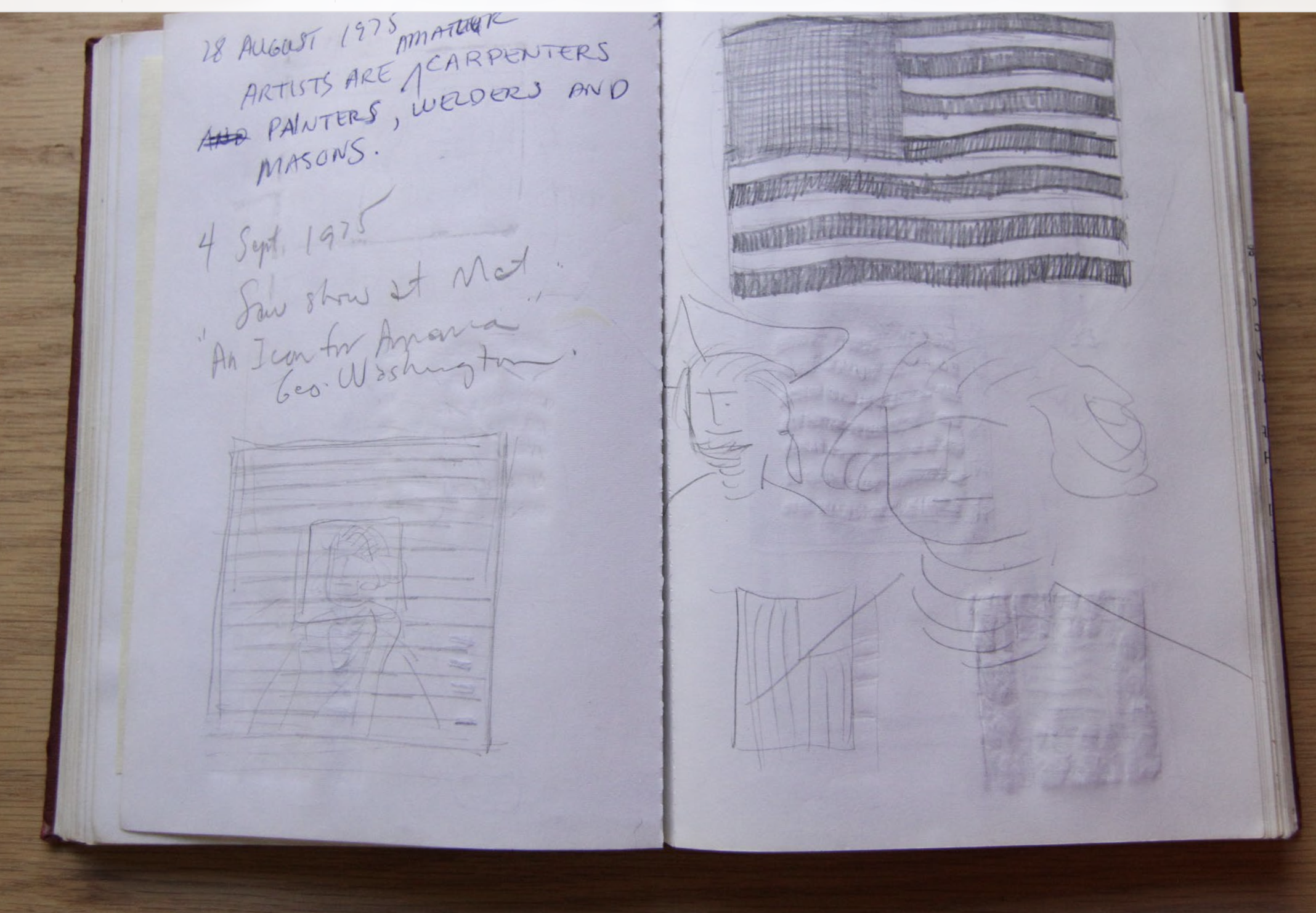
THOR RINDEn’s JOURNAL, 1975
On Sep 4, 1975, Rinden, then 39, mentions in his journal: “saw show at Met/ An Icon for America/George Washington.” The exhibit, which had opened that summer to celebrate the upcoming United States Bicentennial, took a comprehensive and often tongue-in-cheek look at how the first President’s image was woven into American culture. The sketches immediately following this entry appear to be the genesis of a series of American flag constructions that Rinden would create in 1976.
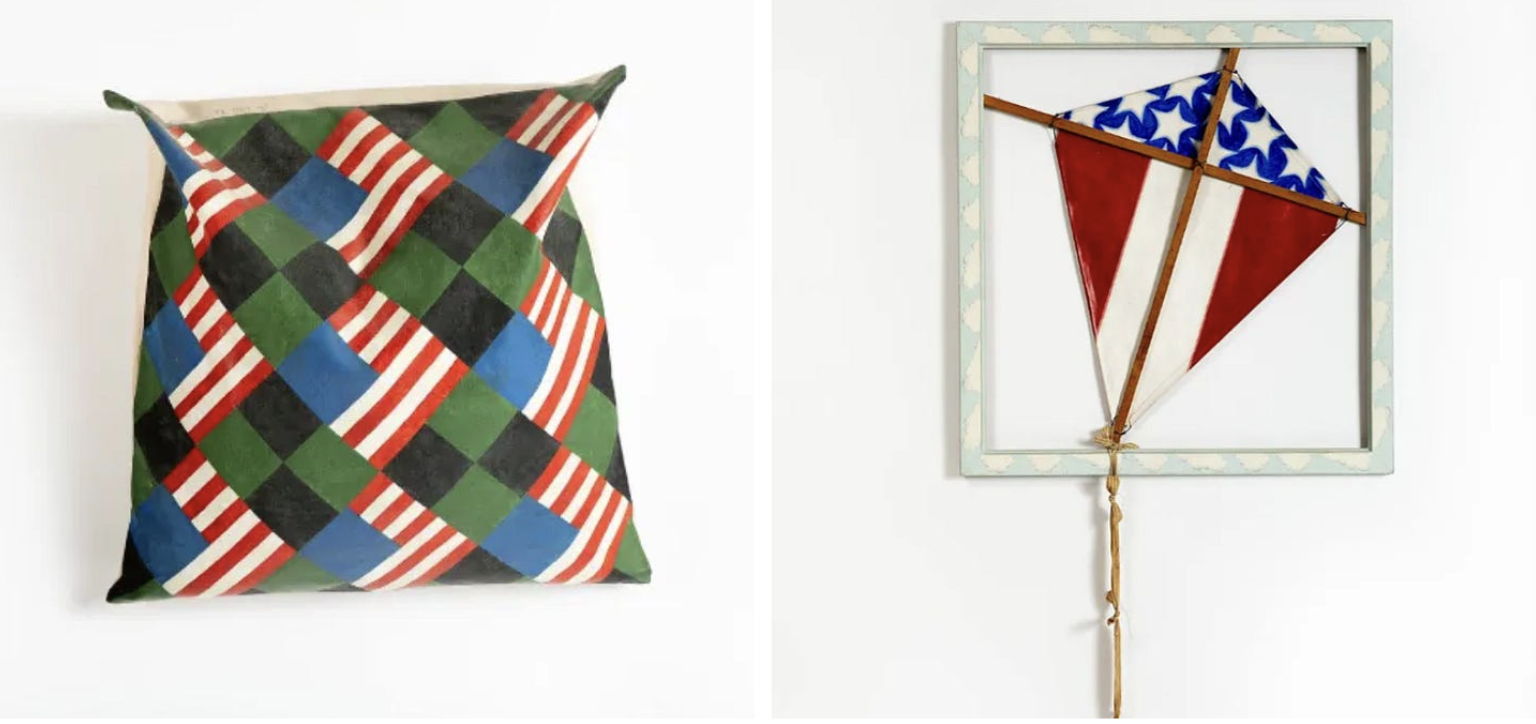
Soft Sell Patriotism, 10/76 , 13.5” x 13.5” and Go Fly a Flag, 10/76, 17” x 17.5”
all FLAG photos by John Marolakos
Rinden’s childhood friend Ann McChord watched the series take shape as he worked in his Brooklyn studio, producing one flag each month from January through June, then seven more in only two months, September and October, so he could finish before the end of the Bicentennial year.
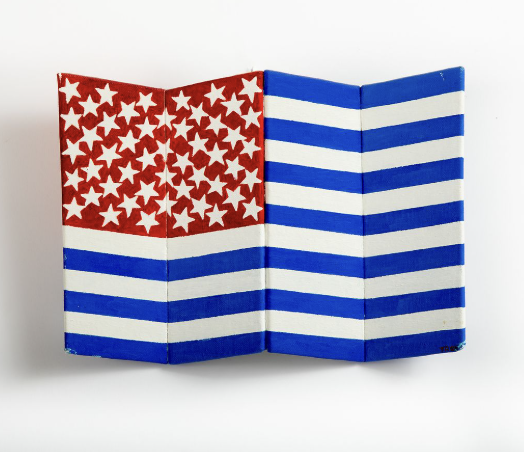
9/11 (Everything's Changed), 2001, 12" x 9"
The two had grown up together in Marshalltown, Iowa, where they shared “midwestern corny backgrounds,” in an “area and era where everyone was patriotic,” gathering annually to watch “dinky fireworks” on July 4th. Throughout their lives, both Iowans maintained a strong sense of their heritage. “We know from whence we came,” McChord recently told me. From the get-go, the artist was determined to keep the flags together. When McChord purchased all 13 in 1990, she promised never to break up the series. (In 2001, Rinden gifted a 14th flag, 9/11 (Everything’s Changed), to McChord.)
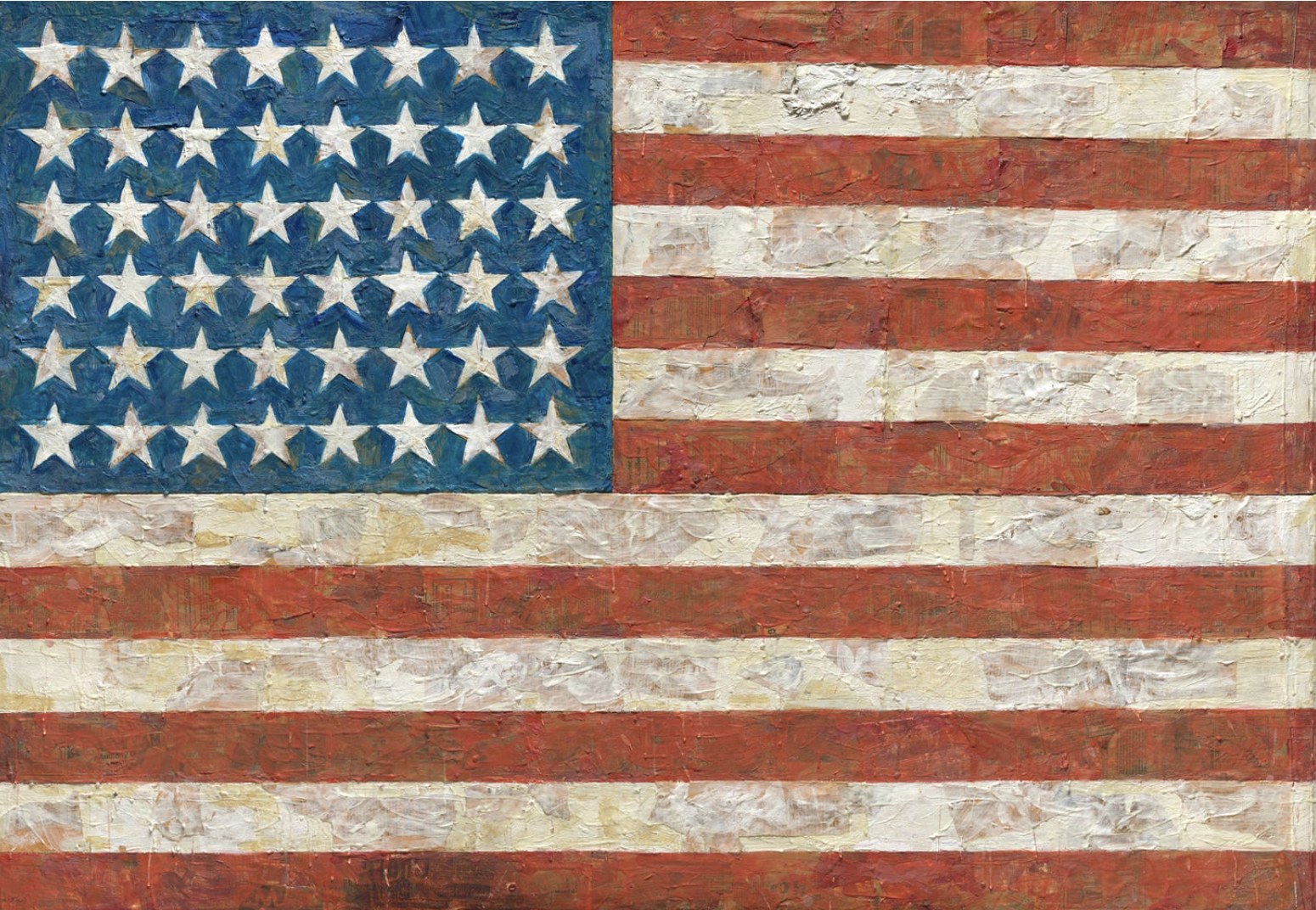
Jasper Johns, Flag, 1954-55
When Rinden began working on his Bicentennial series, Jasper Johns was on his mind. In a 1976 journal entry, while deriding a room of American abstract paintings at MoMA, Rinden interjected: “not the Johns flag!” More than twenty years earlier, Johns had made Flag, the first of what would be over 100 American flag works. The familiar flags, like his targets, allowed Johns to make paintings with images “which are seen and not looked at, not examined.”
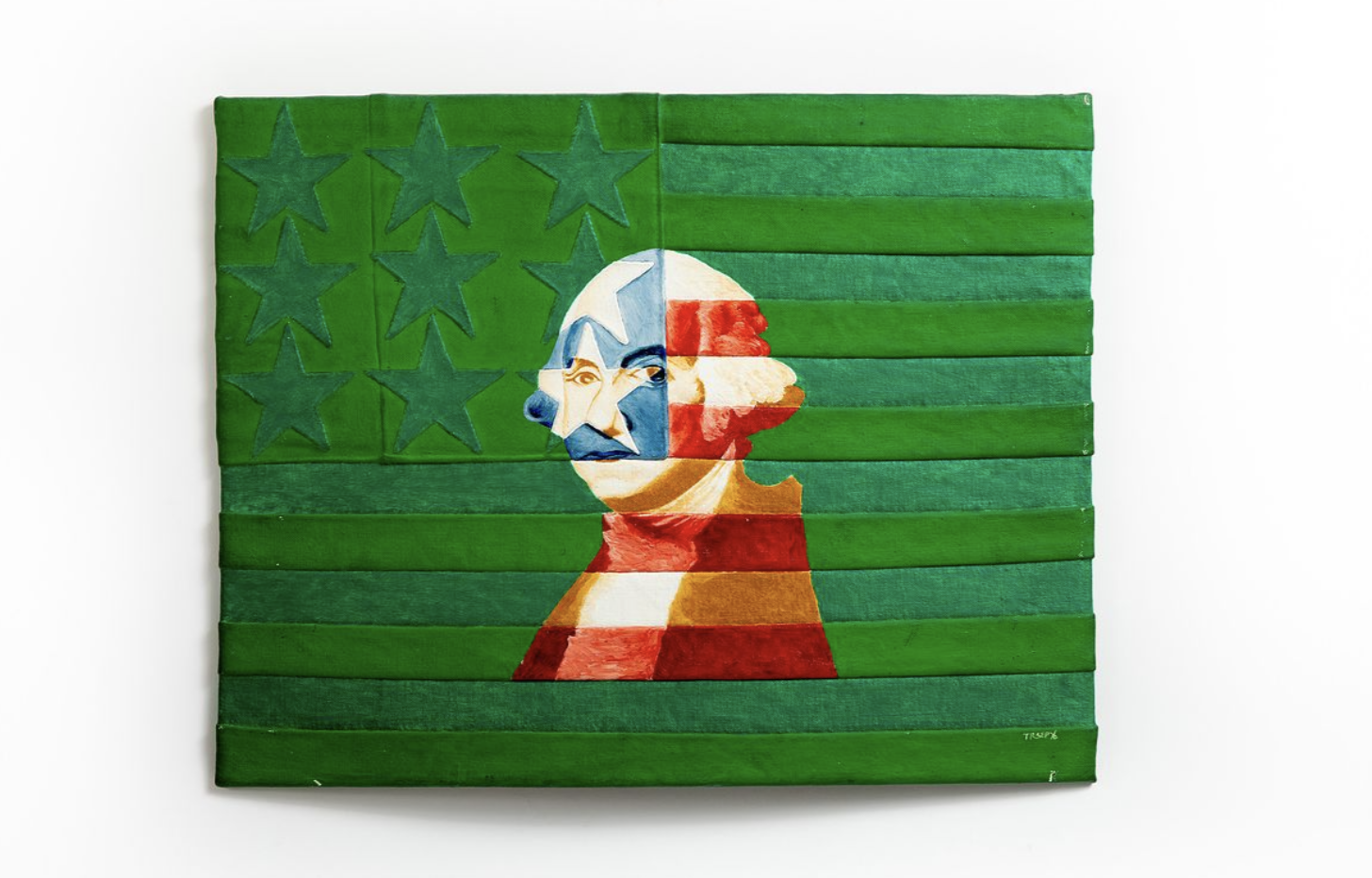
Buy George, 9/76, 15.5” x 12”
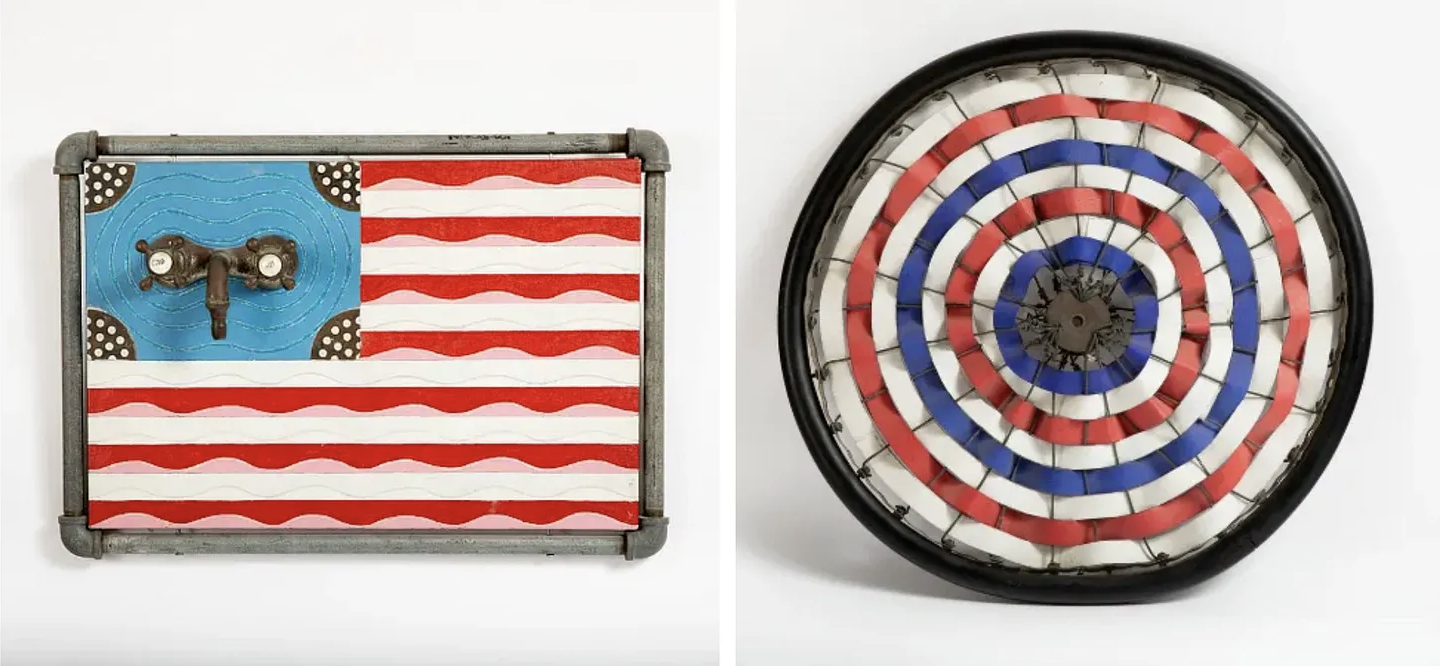
American Standard, 5/76, 20.25” x 14.25” and Bi-cyc-tennial, 1976, 18.5” diameter
Johns appropriated the American flag. Rinden mined it. For Johns, the flag was a means of exploring process and materials without addressing its meaning. For Rinden, it was a springboard to play with visual elements and different forms of construction. A close look at his witty titles reveals how Rinden’s flags also slyly point to aspects of American culture and patriotism.
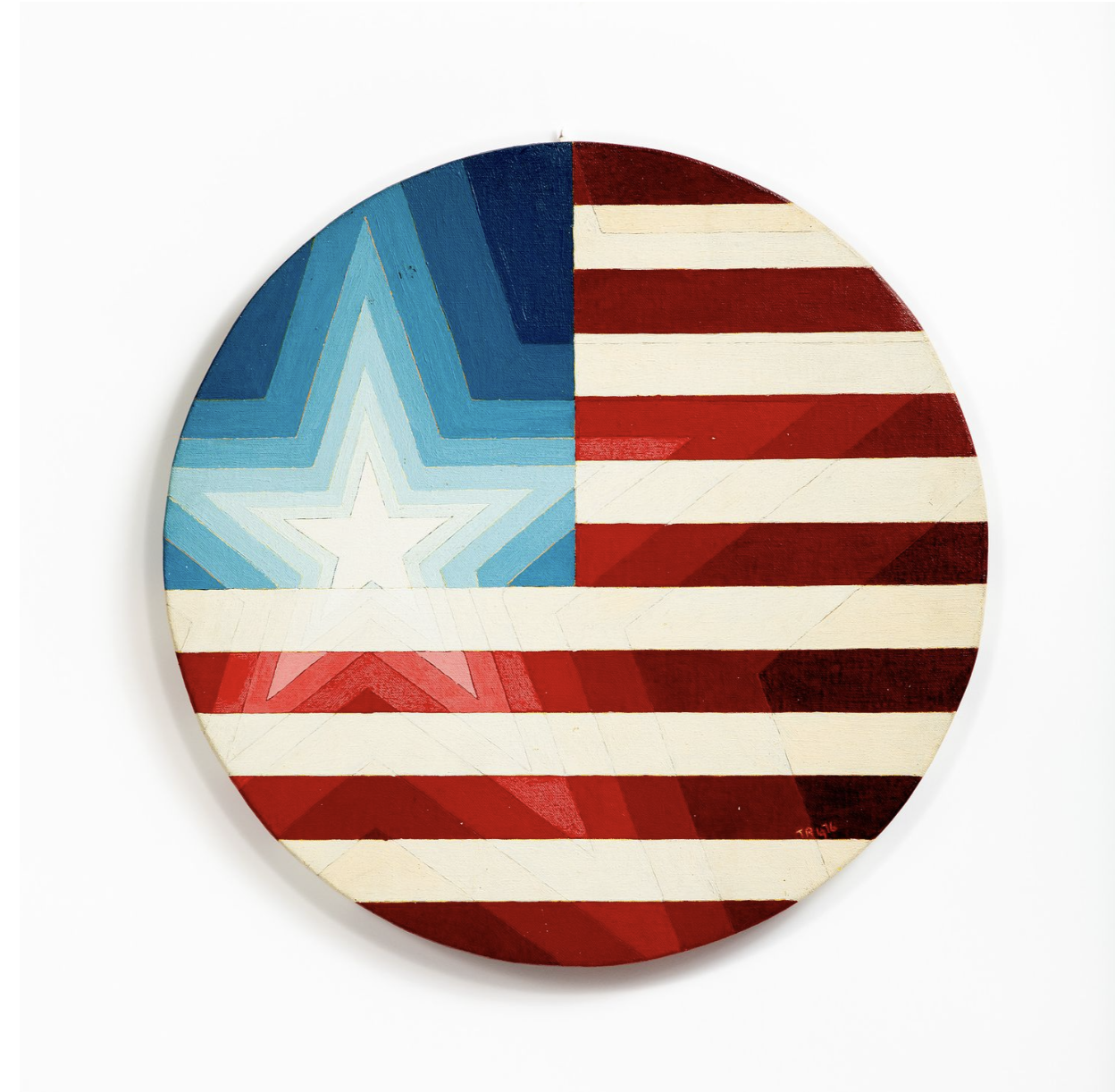
Stars and Stripes Forever, 9/76, 16” diameter
The American flag design, with its box of stars and alternating red and white stripes, offered Rinden endless possibilities for graphic riffing. Stripes could become wave-like, or streamers woven into the spokes of a wheel for a bike parade. He could use only one star, eliminate them completely, or give them a radiant effect.
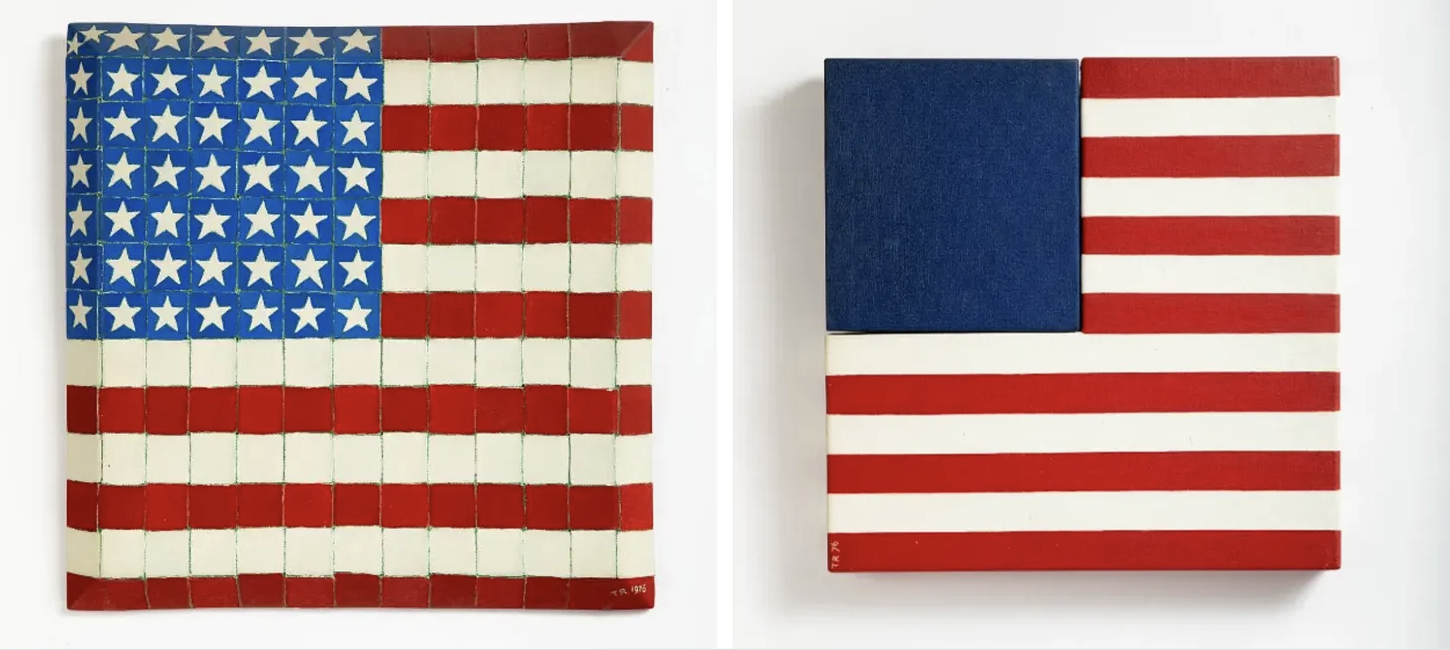
Made in the U.S.A, 2/76, 13” x 13” and The Red, White, and Blue 3/76, 13.25” x 13.25”
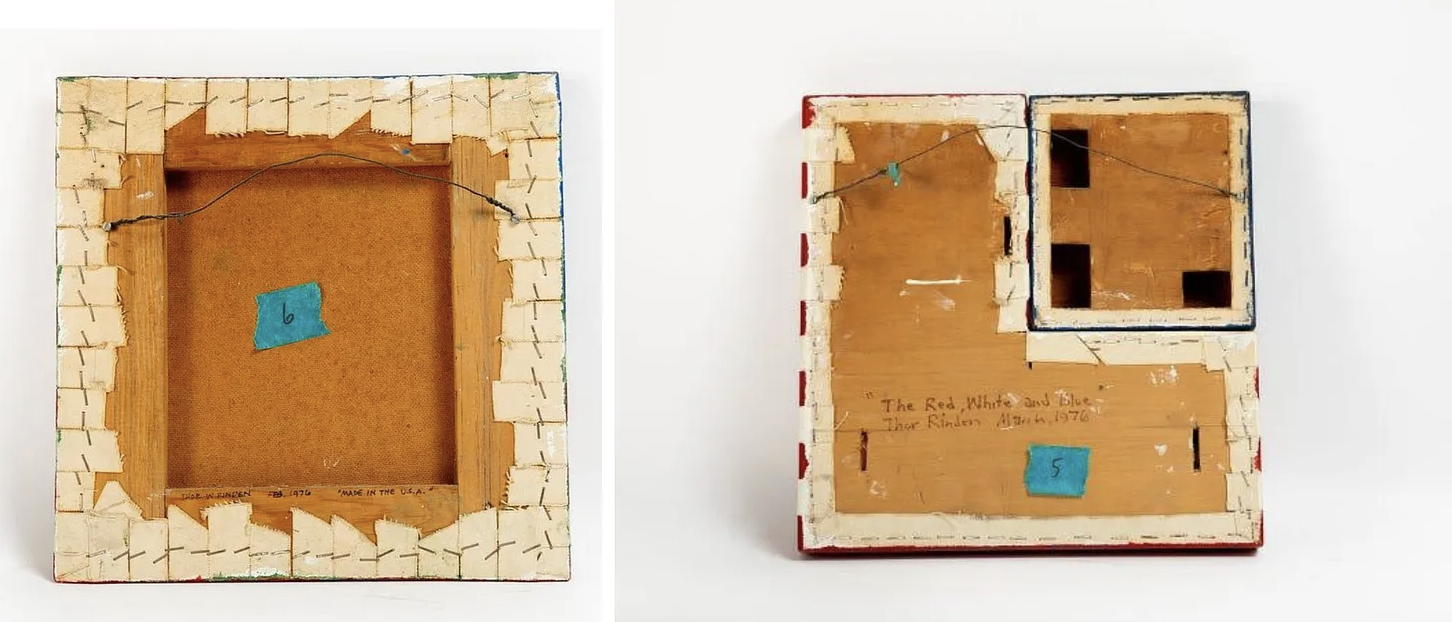
versos of Made in the USA and The Red, White, and Blue
Throughout his career, Rinden devised novel approaches that challenged the flat, rectangular, and untouchable picture plane. He built his frames and stretchers, wove strips to create canvases, and embedded smaller canvases into larger ones. As he declared in a 1975 journal entry: “ARTISTS ARE AMATEUR CARPENTERS, PAINTERS, WELDERS, AND MASONS.” For Rinden, “the hand-worked or wrought feel is what gives the work its ‘life.’”
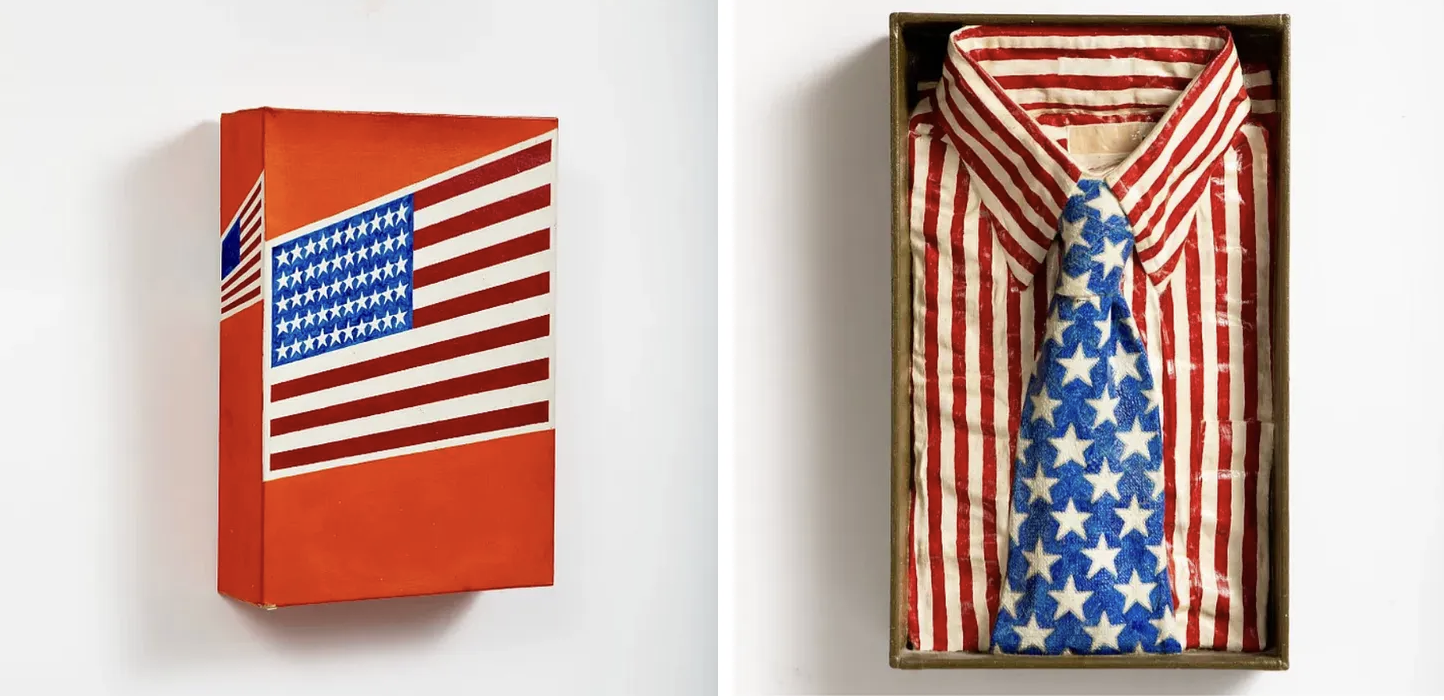
USA’s (Wheaties Box) 6/76, 7.5” x 11”and $19.76 (Brooks Brother’s Shirt), 4/76, 8.5” x 14”
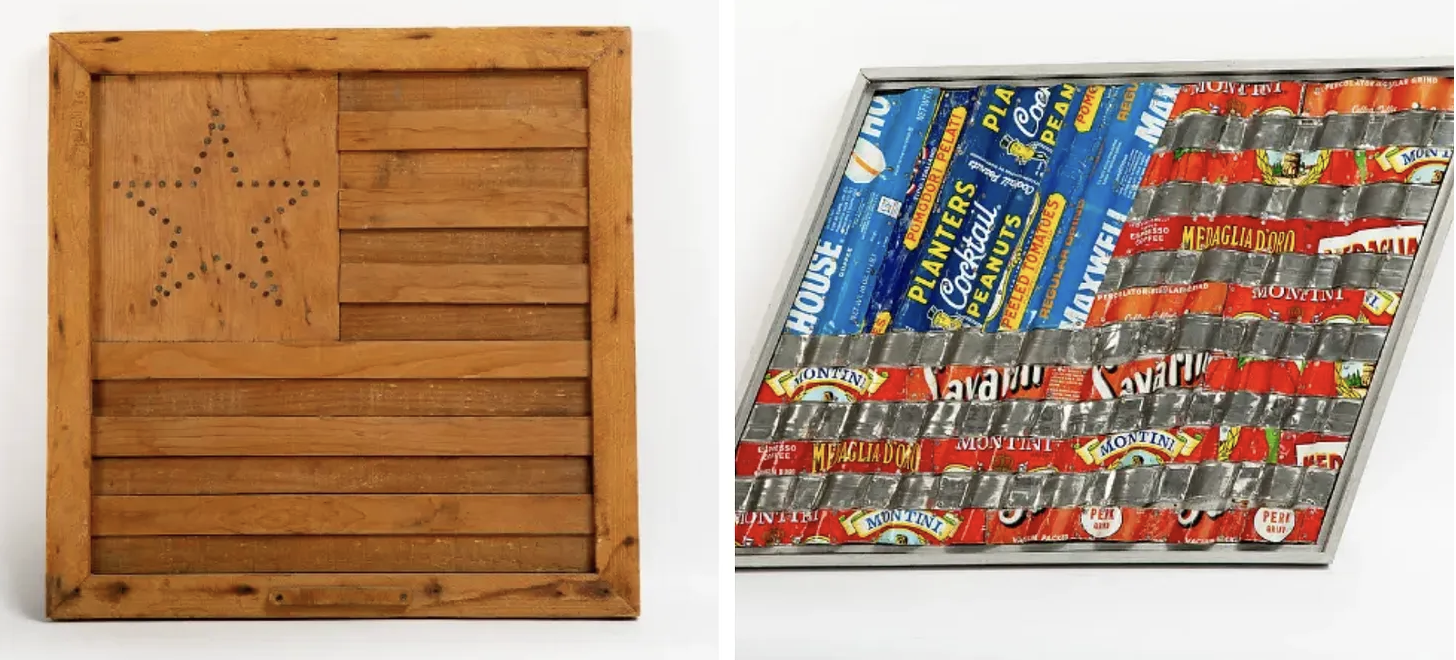
The Crate American Flag 1/76, 18.25” x 18.25” and Ameri-Can, 9/76, 19.25” x 14.75”
In 1976, while working on the flag series, Rinden jotted “a bicentennial note,” positing that America’s obsession with “bigness” was causing problems for the country and that “big” American art might be repeating that mistake. All of his flags are under two feet in any dimension (significantly smaller than the canvases he criticized at MoMA), giving them the feel of constructed objects rather than flat paintings.
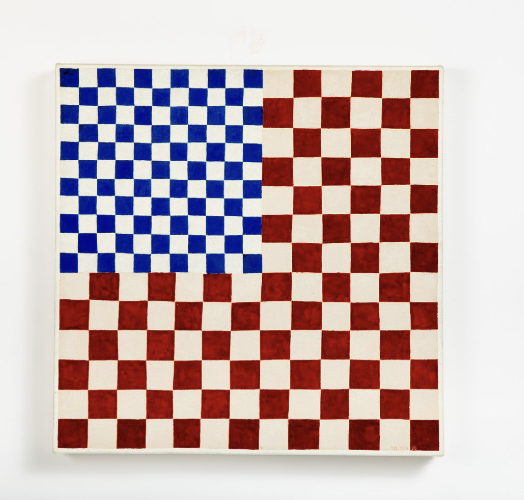
Keeping Nationalism in Check, 10/76, 17” x 17”
In Keeping Nationalism in Check, Rinden recasts the flag as a checkerboard, pitting red and white against blue and white. Today, the title's tongue-in-cheek warning to keep nationalism in check could certainly apply to American tribalism. Given how divided our nation is and how it fails to provide "liberty and justice for all," pledging allegiance to the American flag can feel disingenuous.
I certainly struggle with my feelings about being American. When my son recently competed at the Special Olympics, I reluctantly sang the National Anthem. As we celebrate the country’s 250th anniversary, love of country feels more fraught than it did in 1976. I envy Thor’s uncomplicated patriotism.
Thanks to Ann McChord, his irreverently patriotic series has remained intact. Now 90, McChord is hoping to find it a new home — one that will keep the flags together, the way she always has. If you have ideas for where she might place 13 Original States, please get in touch via the button below.